

Do you remember your first role model? Were they the same gender as you? The same skin colour? The same disability? Did you share something in common?
In light of the passing of Dr Jane Goodall, we reflect upon the importance of diverse role models, particularly within STEM careers. Dr Goodall created the Roots and Shoots programme to empower and encourage young people to pursue their passion, mobilize their peers, and become the compassionate citizens our world needs to ensure a better future for people, other animals, and our shared environment.
STEM role models serve as inspiration for young people, especially underrepresented groups, by demonstrating that success in STEM fields is attainable regardless of who you are. Diverse role models can help break down stereotypes and biases, and bridge the gender gap by proving that anyone can excel regardless of their sex, gender, race, or socioeconomic status. Dr Goodall served as a role model for millions of children and revolutionised science by creating space for women.
So how do role models inspire young people?
Inspiration and Representation
STEM role models serve as inspiration for young people, especially underrepresented groups, by demonstrating that success in STEM fields is attainable regardless of who you are.
By showcasing their own achievements, role models draw attention to the vast opportunities available. Role models have the potential to leave a lasting impact on future generations, influencing the career choices of countless young people, and promoting the advancement of science and technology.
By engaging with these young people, they provide inspiration and demonstrate that diverse backgrounds are not barriers but strengths in pursuing careers in STEM.
Breaking Stereotypes and Addressing the Gender Gap
Much like the work of Dr Goodall, role models from underrepresented groups challenge stereotypes associated with certain demographics.
This helps broaden perceptions about who can be a scientist, an engineer, a doctor (and so many others), and encourages a more diverse range of young minds to consider and pursue these fields.
Anyone can excel regardless of their gender, race, or socioeconomic status.
Community Building and Mentorship
Role models can serve as mentors, providing guidance, advice, and support to those who are just starting their STEM journeys, which can be invaluable for personal and professional development.

How does Dream Networks implement role models into our work?
Here at Dream Networks, we are on a mission to increase the number of female & BAME Engineers who succeed professionally, and to support young people to explore a career in engineering. Our work promotes engineering as a career option to children from predominantly low-income or BME backgrounds.
Child participation is emphasised within the United Nations Convention on the Rights of the Child. Articles 2 & 29 stress the importance of children's rights regarding their sex. Designers, researchers, architects, and policymakers possess a unique opportunity to champion this right by actively involving children of underrepresented sexes and genders in the design process.
For this reason, 75% of the people who co-design and sustainably build our play spaces are either women, BAME, or under the age of 18.
One child shared their excitement about meeting a black engineer, saying "I never knew someone like me could do something like this".
STEM role models have the potential to leave a lasting impact on future generations, influencing the career choices of countless young people and promoting the advancement of science and technology.
Who are our greatest role models?
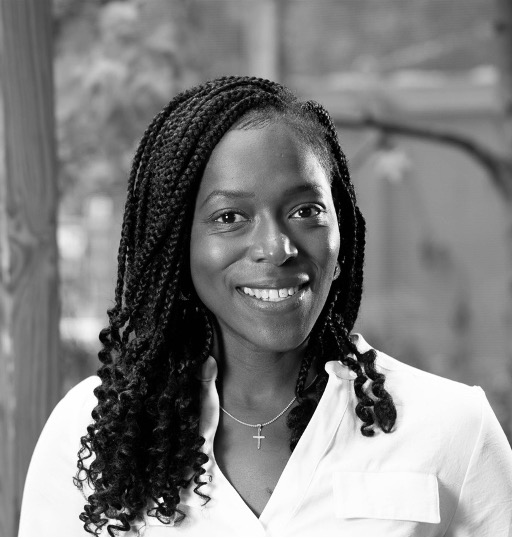
Marie
CEO & Founder
One of my greatest role models when I was younger was Leonardo da Vinci. Why? Because he broke the mold. He was a polymath who refused to confine himself to one area of knowledge, expertise, or interest. Instead, he was a creative, lifelong learner who shaped the way we see science, architecture, aviation, art, and so much more today. I especially love how he chose to write backwards—maybe just for the fun of it.

Anna
Community Outreach Manager
Some of my greatest role models include Jane Goodall, Dian Fossey, Dorothy Cheney, and all women I knew pursuing scientific careers in the natural world. I loved the idea that these women were actively going against the expectations of women and made scientific careers so much more accessible for women everywhere.

Samantha
Content Marketer
One of my greatest role models is Wangari Maathai. I admire how she championed both people and the planet, showing that real change begins with small, consistent actions. Her courage to stand firm in her convictions, even when it was unpopular, continues to inspire me. I carry that spirit with me by appreciating nature on my walks and runs, a reminder that caring for the environment is also caring for ourselves and future generations.
Need help designing more inclusively?
At Dream Networks we work with businesses, schools and communities towards a common vision of play areas that are accessible for all children, regardless of their socio-economic status and physical abilities.
Each of our collaborators provides valuable skills and resources to bring this vision to life. Here you can find detailed information about working with us. There is a variety of ways to get involved - all we ask for is that you share our vision!
Whether you are a business owner, an architect, a school teacher, a community member, a governor, a parent, an employee, a community activist, a child, or the president, contact us and let's talk about collaboratively enabling Play4all.
Resources
Gosso Y, Almeida Carvalho AM. Play and Cultural Context. In: Tremblay RE, Boivin M, Peters RDeV, eds. Smith PK, topic ed. Encyclopedia on Early Childhood Development [online]. https://www.child-encyclopedia.com/play/according-experts/play-and-cultural-context. Published: June 2013.
Lambert E. Teaching inclusion and diversity through play. The genius of play [online]. https://thegeniusofplay.org/genius/expert-advice/articles/teaching-diversity-inclusion-through-play.aspx#. Published: unknown.
Lindon, J. Cultural diversity in the early years. Community playthings [online]. https://www.communityplaythings.co.uk/learning-library/articles/cultural-diversity-in-the-early-years. Published: June 2012.
United Nations. The 17 Goals. United Nations Sustainable Development Goals [online]. https://sdgs.un.org/goals. Updated: 2025.

