
Who Shapes the Conditions That Help Children Thrive?
Children don't miss out on opportunities to play because communities don't value play.
This is one of the biggest misconceptions I continue to encounter when discussing children's right to play.
Research from the United Nations Convention on the Rights of the Child (UNCRC) and the International Play Association has consistently highlighted that children's opportunities to play are often constrained because governments, local authorities, planners and other institutions have not consistently prioritised children's right to play.
Yet our research tells another story.
Working alongside more than 400 children, parents, teachers and community members across the UK and East Africa, we found something remarkably consistent.
Communities already know that play matters.
They understand that play helps children develop physically, emotionally and socially. They recognise its importance for learning, belonging, health and community life. In other words, communities already understand that play contributes to children's prosperity.
The question, therefore, isn't whether communities value play.
The question is:
How do we create systems that enable communities to shape the conditions that make play possible?
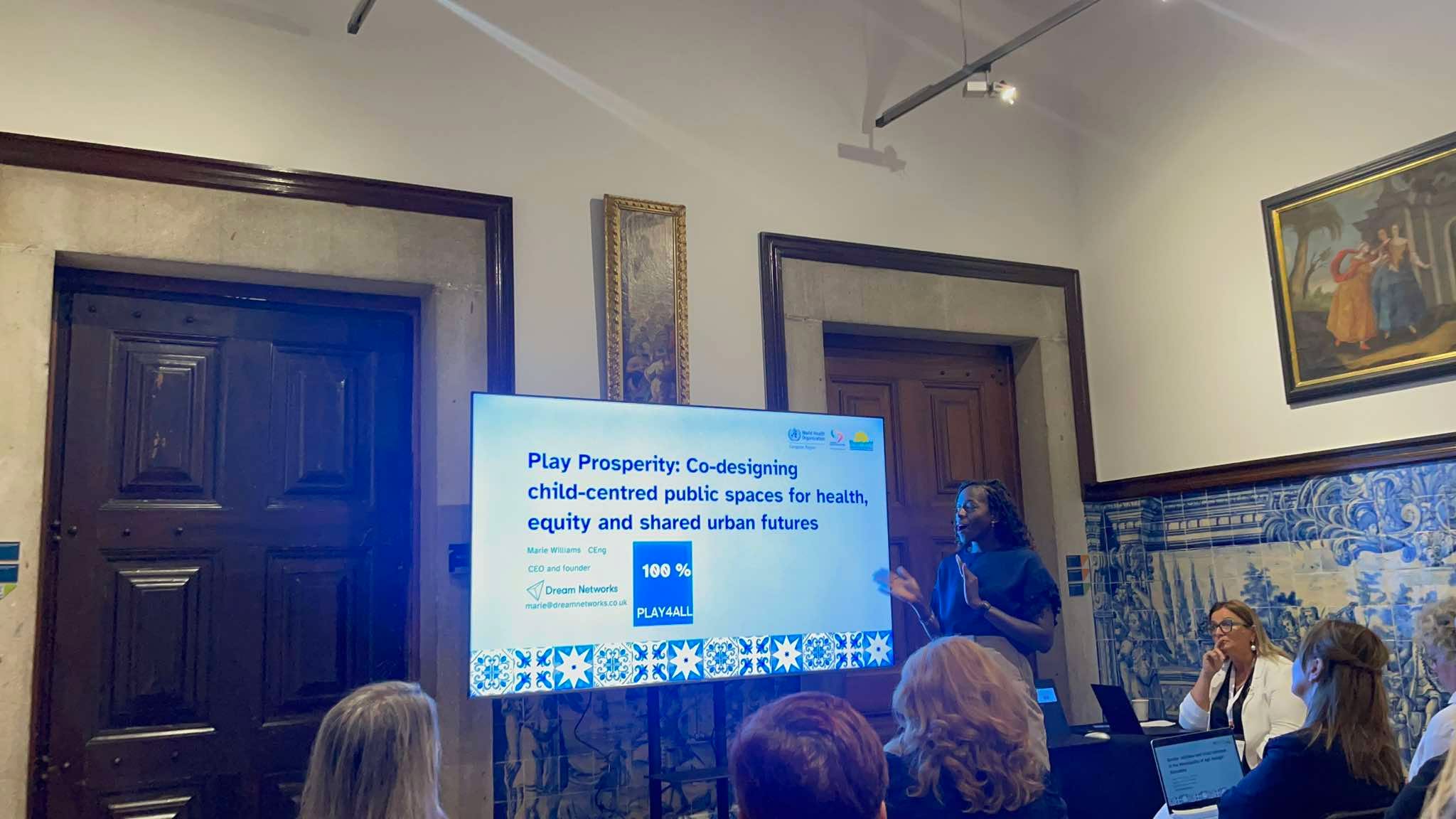
Sharing an alternative approach to play during the World Health Organisation Healthy Cities Conference
Earlier this month, I had the privilege of presenting this thinking at the World Health Organisation Healthy Cities Annual Business Meeting and Technical Conference in Viana do Castelo, Portugal.
Bringing together around 520 politicians, advisers, academics and practitioners from more than 40 countries, the conference explored how cities can become healthier, more equitable and more prosperous places for people.
Over 90 minutes, we discussed children's health, public space, urban planning and the future of child-friendly cities.
My contribution centred on two words:
Play and Equity.
Rather than asking:
How many playgrounds have we built?
I suggested that perhaps we should instead ask:
What is play actually enabling within a community?
And perhaps an even more important question
What do communities want play to enable?
Those questions sit at the heart of the Play Prosperity Framework.
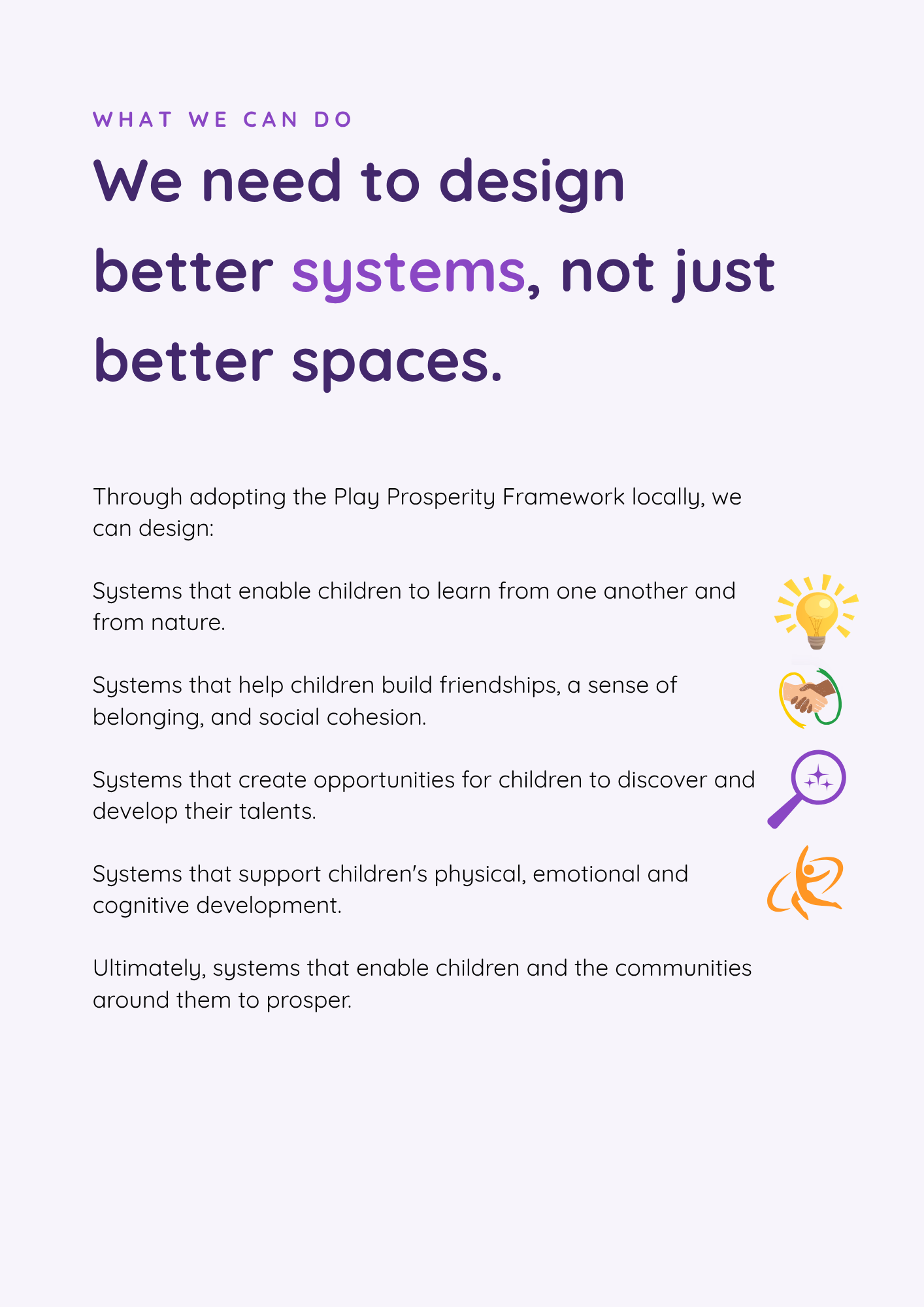
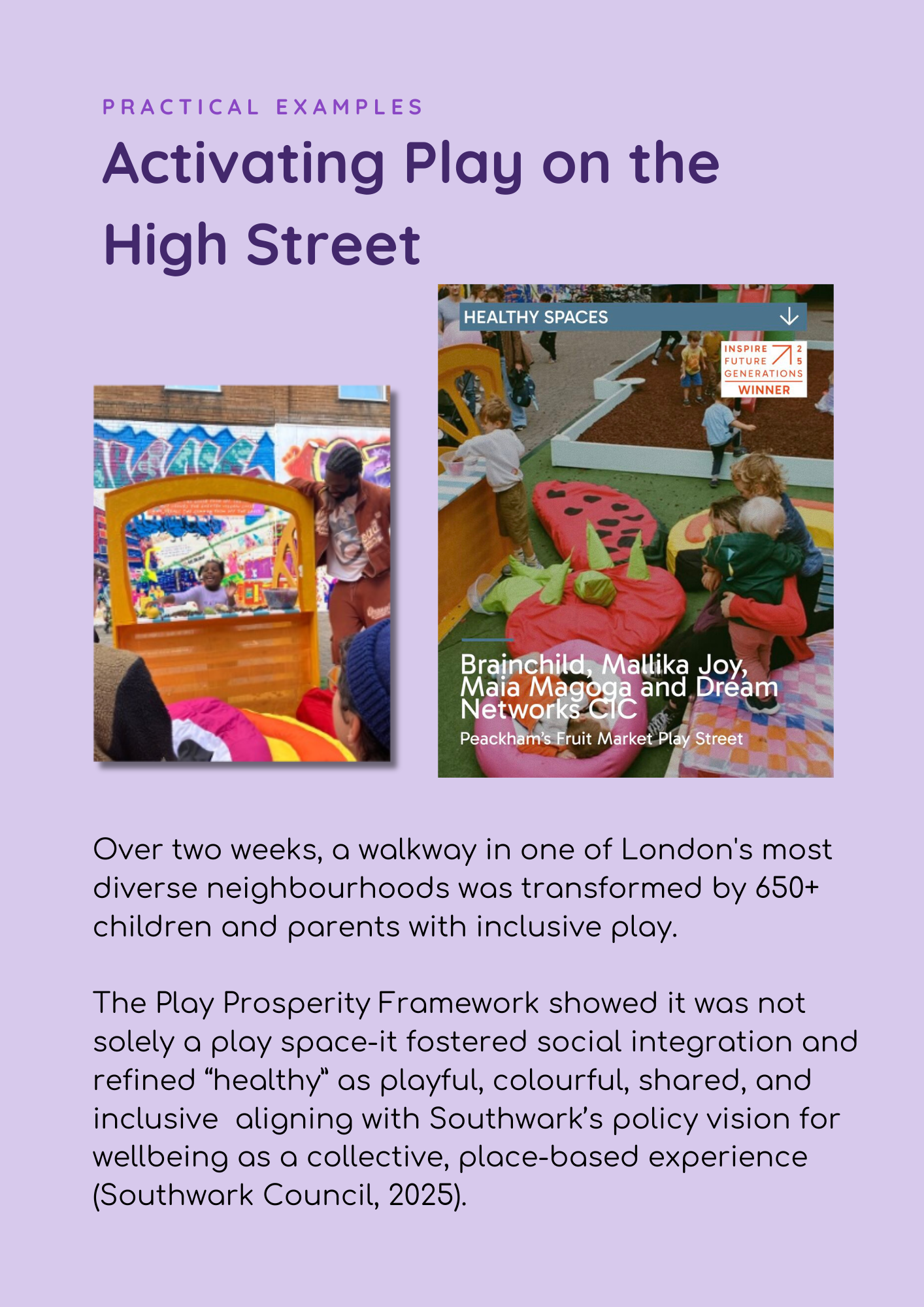
The Play Prosperity Framework emerged through conversations with more than 400 children and adults across the UK and East Africa. Rather than beginning with predetermined indicators of success, we began by listening.
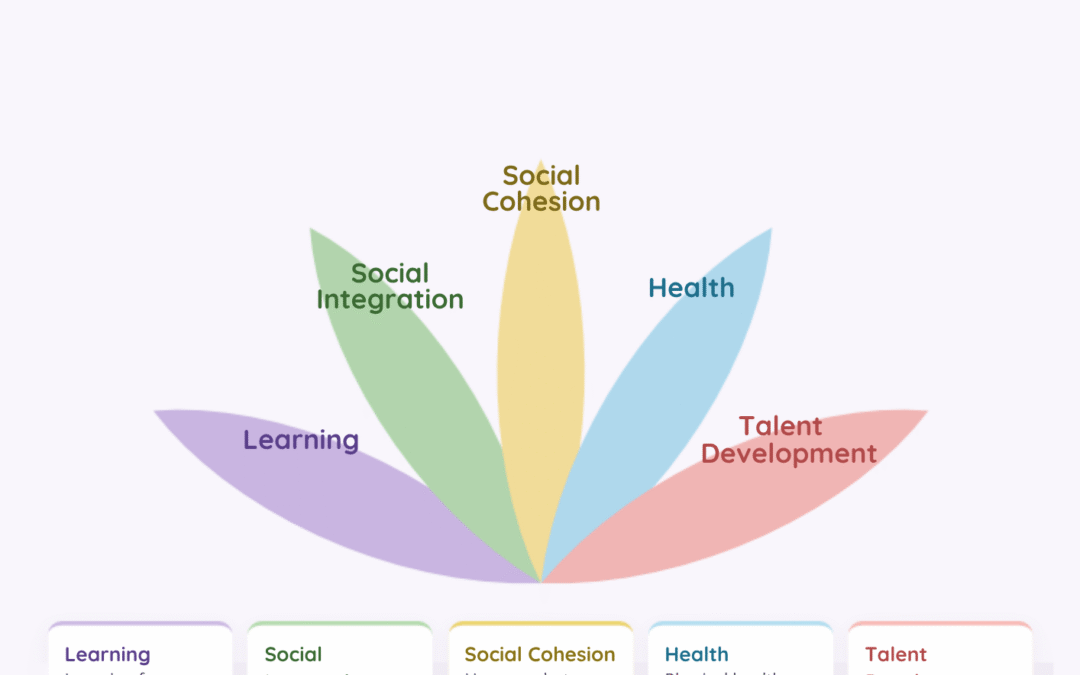
Children, caregivers, teachers and community members consistently described play as something that enabled children to learn from one another and from nature, build friendships, belonging and social cohesion
- discover and develop their talents
- strengthen their physical, emotional and cognitive development
- experience healthier lives
These became the foundations of the framework.
The framework does not ask communities to adapt to predefined ideas of prosperity.
Instead, it asks institutions to understand prosperity through the values and aspirations of communities themselves.
Climate resilience is a play issue
One of the strongest themes emerging from recent conversations across the sector is that children's opportunities to play are inseparable from climate resilience and public health.
During this year's London Climate Action Week, the Curious Cities Assembly, organised by Clean Cities, invited us to not only imagine healthy cities but also suggest and inspire ways to achieve more equitable health.
Among the priorities they identified were cleaner air, safer streets and healthier neighbourhoods.
Those conversations immediately reminded me of the work we undertook with communities in Kitengela.
Although the contexts were very different, the aspirations were remarkably similar.
Children and families did not simply ask for playgrounds.
They wanted environments where children could breathe clean air, connect with nature, feel safe, move freely and develop healthy relationships with one another.
In other words,
Children don't simply need places to play; they need healthy, climate-resilient environments that make play possible for all.
Climate resilience is not separate from children's right to play.
Clean air, biodiversity, nature-based solutions, flood resilience, shade, cooler streets and safer neighbourhoods all influence whether children are able to play, explore and flourish.
Planning for climate resilience is therefore also planning for children's wellbeing.
Beyond playgrounds: designing better systems
This is why I believe our focus cannot simply be on designing better play spaces.
It must be about designing better systems.
Systems where planning, housing, biodiversity, education, transport and public health work together to create the conditions that communities themselves have identified as important.
Too often, we evaluate success through outputs.
How many playgrounds? How many trees?
How many parks?
Those measures are important.
- But they tell us very little about whether children are healthier.
- Whether they feel they belong.
- Whether they have developed friendships.
- Whether they have opportunities to discover their talents.
- Whether they can safely experience nature.
The Play Prosperity Framework encourages us to measure those outcomes instead.
Redistributing power
For us at Dream Networks C.I.C., this is what a more inclusive and ultimately more decolonial approach to planning looks like.
It is about redistributing Power so that communities are not simply consulted but help define the indicators by which successful places are measured.
It is about recognising People** as experts in their own lives.
Rather than asking communities to fit within institutional definitions of prosperity, institutions should become better at recognising the knowledge, culture and aspirations that already exist within communities.
Planning should not simply produce places.
It should enable communities to shape them.
Looking forward
The Play Prosperity Framework emerged from my doctoral research at The Bartlett School of Architecture, UCL, building on ideas from the **UCL Institute of Global Prosperity**, whose work continues to challenge how prosperity is understood and measured.
Through Dream Networks C.I.C., we have had the privilege of developing these ideas further alongside children, communities and partners across cities, refugee settlements and host communities.
If we are serious about creating healthier, more equitable and more climate-resilient cities, perhaps the question is no longer:
Where can children play?
Perhaps it is:
Who gets to shape the conditions that enable children and communities to thrive?
Are you interested in applying the Play Prosperity Framework in a play space you already know or one that you're designing, planning for or co-producing? If you answer is maybe or yes, please do get in touch.
Marie Williams
Dream Networks CIC CEO and Founder

